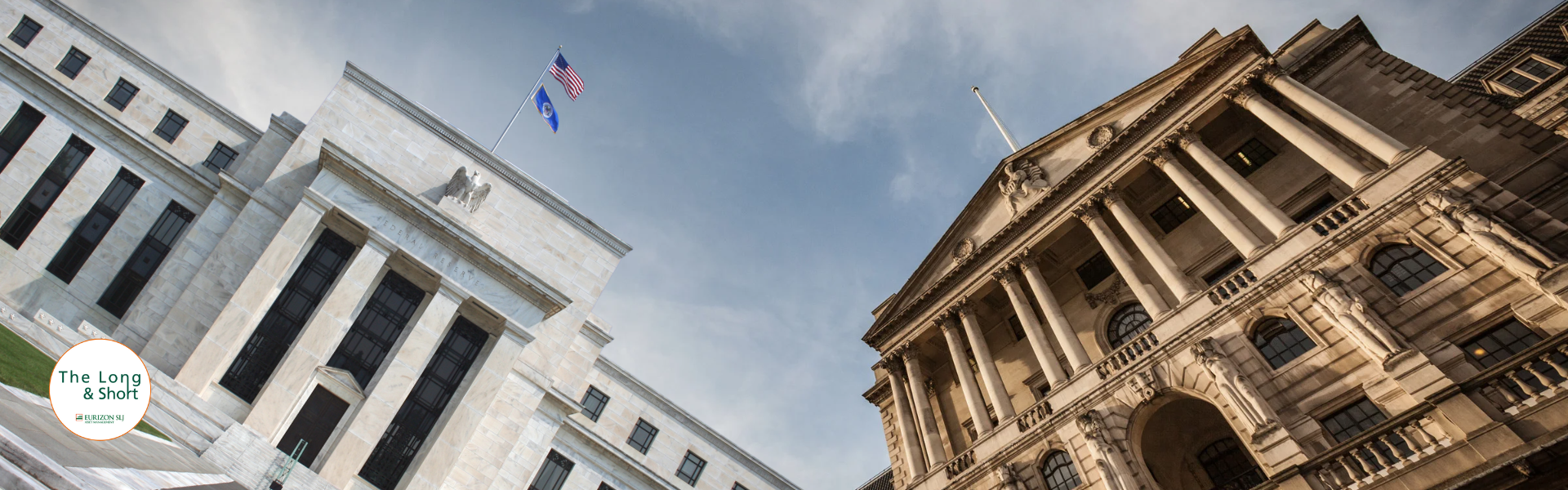
“Waiting on the World to change“
John Mayer, Waiting on the world to change
In our last piece, we discussed the most recent FOMC meeting. The ‘pause’. Essentially, we argued that the most significant element of the meeting was not the pause itself - that was well telegraphed by both Chair of the Federal Reserve and Jefferson ahead of the blackout period. Rather, it was the accompanying statement and economic projections that pointed sharply more hawkish than expected - at least at first reading. The statement was clear that “additional policy firming may be appropriate”, the extent of which will hinge on the economy. The revised ‘dots’ (or individual FOMC member rate forecasts for the forecast horizon) shifted the median level up 50bps to 5.6% - a further two rate hikes from the current policy setting.
We also argued that, from our perspective, the ability of the Fed to raise the policy rate to the new median dot is not obvious for a number of reasons: (i) The Summary of Economic Projections pushed the forecast for core inflation significantly higher (3.4% to 3.9%) in 2023 and the headline rate to 3.2% - Cleveland Fed inflation NowCast puts headline inflation at 3.2% in June, six months early, (ii) the projected unemployment rate was revised down and (iii) the growth rate revised higher. Combining i, ii and iii, we argued that the new sensitivity of the Fed to weaker growth and/or weaker inflation means that there is a higher bar to delivering on the projected two further rate hikes.
Ultimately, we argued that it is possible that this was an intentionally hawkish forward guidance steer. One that may not have to be delivered upon. Over the past week the terminal rate expectations in the US have remained well contained at the levels prevalent before the FOMC and the raised dots. Plus, ça change, plus la même chose.
This week it was all about the Bank of England
Back in May, the BoE hiked rates 25bps to 4.50% and offered a more reflective forward guidance “if there were to be evidence of more persistent pressures, then further tightening in monetary policy would be required”, at the time taken for a tacit expectation (or in retrospect, a hope) that falling inflation would give the Bank the ability to pause and reflect on the implications of past monetary tightening as growth projections (while upgraded at the May MPR) remain vulnerable to the backdrop of high prices, high rates and high taxes - all of which, given their proximate trajectories have likely still significant lagged effects on the real economy.
Of course, an inflation risk premium remained in the curve but it was the most recent, successive, inflation disappointments - leaving the headline at 8.7% for two months and core accelerating to 7.1% on core inflation (from an albeit brief low point of 5.8% in January, 6.2% in March and 6.8% in April) - that saw the market price a higher terminal rate in the UK .
This week, the Bank of England delivered a larger than expected 50bp hike following these “significant upside news in recent data that indicates more persistence in the inflation process”. While the 50bp increment was larger than expected, the recent strength in inflation (and most recent wage data) had shifted the balance of expectations to include the prospect of a larger policy increment. It is very possible therefore, that the BoE came to the conclusion that with market expectations rising and the prospect of having to extend the hiking cycle beyond the June meeting also rising that the BoE saw merit, in a bigger increment to ‘get ahead’ of the building price pressures. The emphasis that this decision applied only to “this particular meeting” may be indicative of this thinking and possibly stated to avoid markets extrapolating the 50bp move to future policy decisions - though some very notable analysts have already done so.
The unchanged forward guidance continues to suggest that the BoE would like to pause and revaluate the situation (as per the Fed) but only feel that they can do so if core inflation shows clear signs of easing. However, from our perspective there are still likely pandemic related distortions to core inflation (which would imply the traditional monetary policy bias towards core inflation as a gauge of underlying inflationary pressures and thus policy setting is distorted, and thus unreliable). Indeed, we continue to be of the opinion that UK aggregate demand is significantly weaker than some of the current data suggests and thus, further tightening in monetary policy will have a disproportionately negative impact on growth without necessarily impacting the distortions that led to the price pressures in the first place - the unprecedented global demand and supply shocks and to a lesser extent Brexit related rebalancing. We continue to expect both headline and core inflation to decline.
There is plenty of anecdotal evidence to support the proposition of weaker underlying aggregate demand: (i) retailers highlighting two clear consumer groups one that is very price insensitive and another, much larger group that is really struggling; (ii) supermarkets reporting 40% increase in ‘value brand products’ and even; (iii) wage negotiations and ultimately pay rises that are a function of higher inflation, not tight labour markets (although there are some clear pockets of tightness). Personally, I think there are question marks about the CPI basket in a period of high distortion and high substitution and foregoing - It is very possible that dynamic changes to the ‘basket’ indicate weaker demand and thus weaker demand driven price pressure - the very thing Bank rate hikes target, monetary policy is intended to reign in aggregate demand in order to prevent demand pull inflation from becoming pernicious.
As inflation continues to decline across the world, led by Emerging Market and increasingly the US, it is extremely unlikely that it does not moderate in the UK (especially when the distortions of the energy price cap roll out of the annual comparison (July should be the next drop). PPI, or producer price inflation has fully normalised and is now running at close to zero on an annualised basis. It is difficult to believe that producers will continue to raise their prices at anywhere near current levels when they have little or no input cost increases when demand is so fragile, in fact it is not hard to imagine sectors where price cutting on the basis of competition may become prevalent.
We have stated on a number of occasions that we are in the Dhingra, Tenreyro camp on UK monetary policy (who argue that forward looking indicators were pointing to material falls in future wage and price inflation and that monetary policy needs time to assess the lagged effects of previous cumulative rate rises). We remain of this view.
Interestingly, in the case of the MPC meeting this week, there has been very modest movements in the market implied expectations of future rate hikes from the BoE (as was the case following the Fed decision (and hawkish dots) last week. Plus, ca change!
Indeed, you could argue that markets are beginning to question the ability of central banks to tighten policy further without breaking something materially. This week’s very disappointing PMI data from Europe is thus a timely reminder that there is more than one macro variable that drives policy, perhaps we have become too complacent about growth, or at the very least the inflation/growth trade-off.
Have you listened to Neil's podcast series?
Request a free trial
* For professional investors only, subject to terms & conditions. By submitting your details, you consent to your data being collected and stored for the purposes of Eurizon SLJ Capital Limited providing information regarding your enquiry and related services. If you have any questions about your data please contact us atresearch@eurizonslj.com.

Our Research
Our written research products aim to provide unique and orthogonal insights on key global economic and policy issues in a timely fashion.